








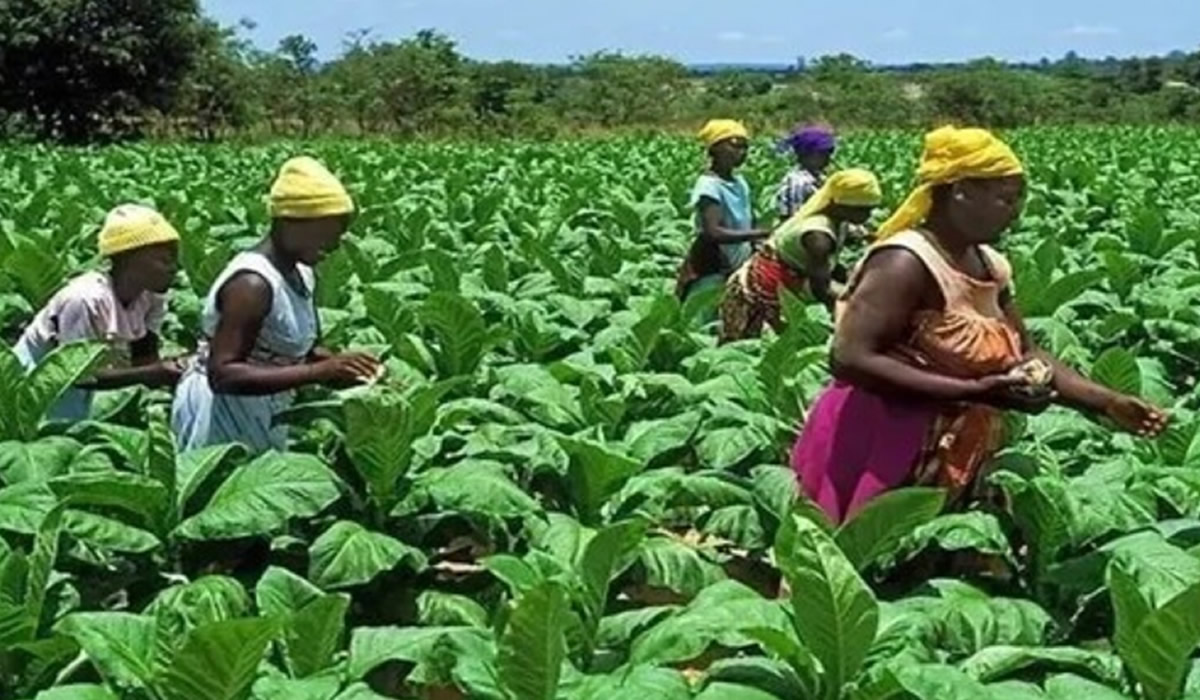
Ghana’s agricultural sector is set for a major overhaul following the introduction of the National Agribusiness Policy, unveiled at the inaugural National Agribusiness Dialogue. The policy, introduced under President John Dramani Mahama’s administration, seeks to shift Ghana’s agricultural model from subsistence-based farming to a high-value, commercially driven, export-oriented industrial system. This strategic shift could significantly impact food security, rural livelihoods, manufacturing capacity, and overall national economic growth.
Agriculture has long been described as the backbone of Ghana’s economy, employing millions, particularly in rural communities. Yet, despite its importance, the sector continues to struggle with low productivity, limited mechanization, market uncertainties, high post-harvest losses, and insufficient processing industries. The new policy aims to confront these challenges head-on by building stronger vertical linkages among farmers, processors, exporters, and markets, while improving access to infrastructure, technology, and financing.
A core pillar of the policy is the development of agribusiness corridors — geographic zones designed to integrate production clusters with storage facilities, transport networks, processing hubs and export terminals. This model aims to reduce operational inefficiencies and help farmers transition from smallholder production to commercial-scale agribusiness that can support industrial food processing.
Another major focus is irrigation. Ghana relies heavily on rain-fed agriculture, which makes yields unpredictable and exposes farmers to climate shocks. The policy emphasizes expansion of irrigation schemes, construction of dams, rehabilitation of existing irrigation facilities, and introduction of modern water-efficient technologies. With climate change increasingly altering rainfall patterns, irrigation is crucial for securing consistent production.
The Agribusiness Policy also prioritize’ mechanization and post-harvest management. Mechanization centers will be established to provide farmers with access to tractors, harvesters, planters and processing machines at affordable rental rates. Improved storage, cold-chain infrastructure and processing equipment aim to cut post-harvest losses, which currently stand at 20–40% for certain crops.
Financing remains a critical challenge for farm expansion and agribusiness development. The policy promises to strengthen access to affordable credit through incentives for commercial banks, targeted credit schemes, and partnerships with development agencies. Special focus will also be placed on youth and women agriculture entrepreneurs, who often lack collateral or financial literacy to access loans.
Benefits and critiques
If implemented successfully, the strategy could trigger massive job creation not just for farmers, but also for machine operators, logistics providers, processing workers, marketers, exporters and young agro-tech innovators. Rural communities could transition into industrial ecosystems where farming is integrated with modern processing and export systems, increasing household incomes and reducing rural poverty.
The policy also aligns with global food trends, where demand for processed foods, organic agriculture, and traceable supply chains is rising. Ghana could leverage this opportunity to expand exports of cassava products, fruits, vegetables, spices, grains, poultry feed, and industrial starch.
Critics caution that successful execution will require strong political will, coordinated institutional support, and consistent funding. However, its potential impact is undeniable. Ghana’s new agribusiness policy if pursued aggressively could mark the beginning of a stronger, more industrialized, and globally competitive agricultural economy.